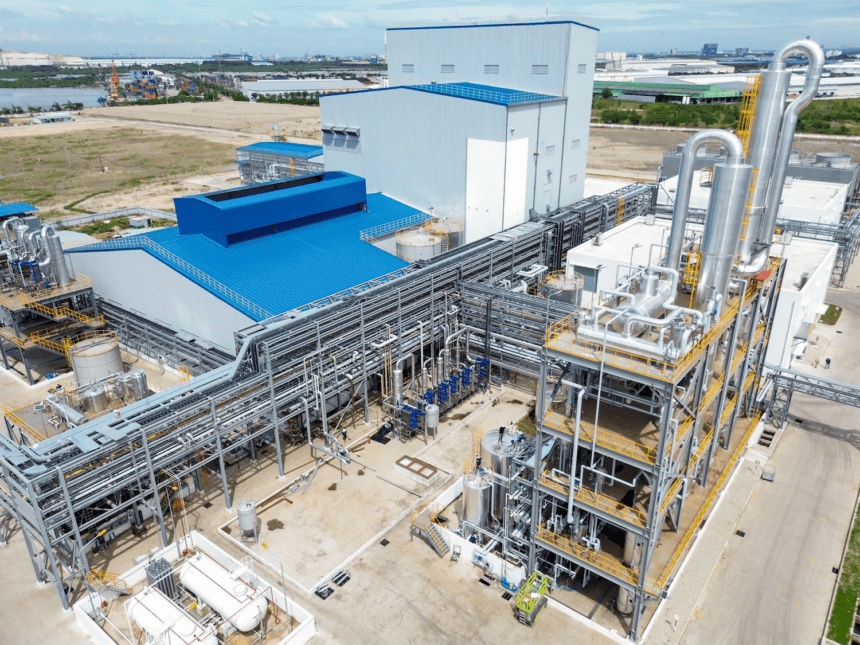
Hyosung TNC has started commercial production of bio-based 1,4-butanediol (bio-BDO) in Vietnam. The South Korean textile maker uses fermentation to make the chemical from sugarcane-derived sugars. This replaces the fossil-based feedstocks used in conventional BDO production.
The facility has an initial capacity of 50,000 tonnes a year. Phased expansion could take it to 200,000 tonnes, depending on market demand. The project is part of a planned US$1 billion investment by Hyosung.
The company says bio-BDO is chemically identical to its fossil-derived equivalent. It can therefore be used to make elastane without changing stretch, recovery or quality.
The material goes to Hyosung’s operations in Dong Nai, southern Vietnam. There, it is converted into polytetramethylene ether glycol (PTMG), a key intermediate in elastane production. PTMG is then used to make regen BIO spandex. The spandex is designed for sportswear, intimate apparel, swimwear and denim.

Keeping these stages in Vietnam is meant to improve supply chain reliability, raise efficiency and cut transport needs.
Sugarcane sourcing and traceability are verified through the VIVE Sustainable Program. The material’s bio-based content is certified under SGS’s Environmentally Evaluated Product Scheme (EEPS).
Hyosung previously commercialised corn-based regen BIO spandex in 2022. It has also developed recycled fibres from PET bottles and discarded fishing nets. Chairman Hyun-Joon Cho described bio-based materials as a strategic growth area. He said the new system links bio-based raw materials with finished spandex fibre.
The company also plans to supply bio-based intermediates for other uses. These include thermoplastic polyurethane (TPU) for automotive interiors and polybutylene adipate terephthalate (PBAT) for biodegradable plastics.