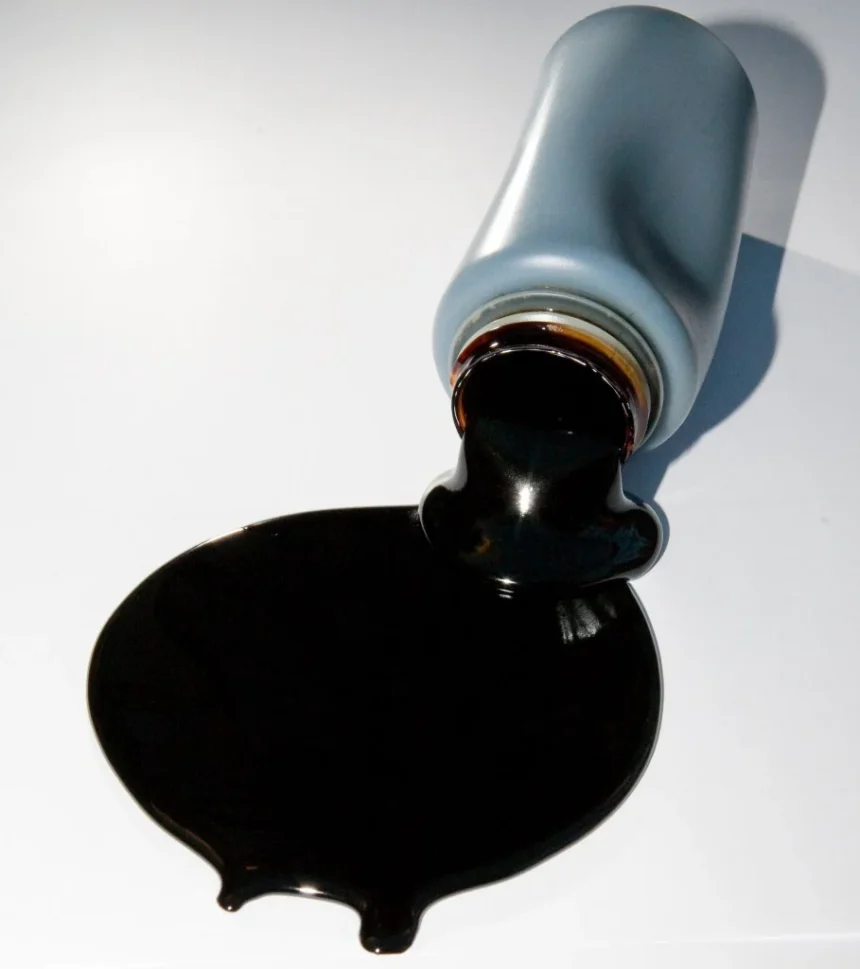
Researchers have turned black liquor, a pulping by-product, into bio-based curing agents for epoxy coatings. Curing agents are the hardeners that set the resin. The work shows that both the lignin and the sugar-rich fractions of the liquor can become useful materials.
The team first separated the lignin by acid precipitation. They then treated the remaining liquid by acidolysis or dialysis, and each route isolated its own saccharide-rich fraction. Both fractions then went through the Mannich reaction, which produced aldehyde-amine curing agents. Spectroscopy suggested the synthesis worked for the lignin-based and saccharide-based agents alike.
To test them, the researchers combined the agents with E901, a bisphenol A epoxy resin, to make protective coatings. Agents made from the acidolysis liquid, named MIAAA and MIBAA, performed better than those made from lignin. Inorganic salts left in the fractions also helped. They acted as fillers and improved the coatings’ mechanical properties.
Results varied by formulation. The MIAAA coating reached a maximum tensile strength of 57.0 MPa. The MIBAA coating gave the best corrosion protection. After two hours in a 3.5 weight percent sodium chloride solution, its impedance modulus at 0.01 Hz was 7.31 on a log scale.

Overall, the findings show that black liquor lignin and saccharides can become effective curing agents for epoxy coatings. The approach points to an experimental route for using every component of this pulping by-product.