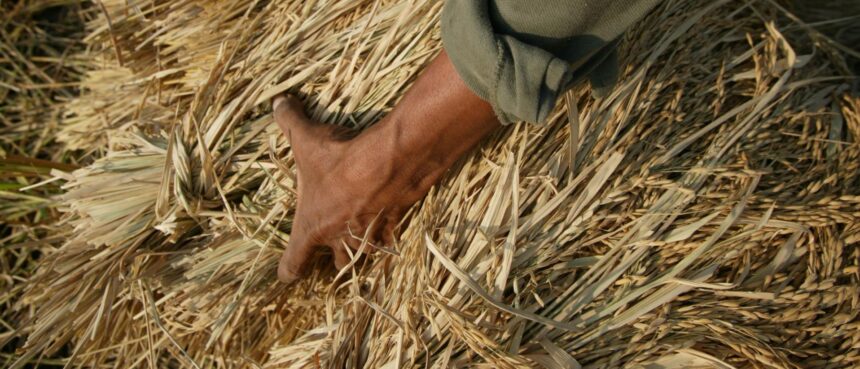
Rice straw is a common farm waste, but researchers think it could help feed crops. A team has used it to make a coating that lets fertilizer release nitrogen slowly, and the study appears in the journal Chemical and Biological Technologies in Agriculture.
Straw-based coatings have a known weakness. Straw absorbs water, which weakens the coating, and the usual fixes rely on costly added chemicals. Those chemicals undercut the sustainability case.
The researchers took another approach. They treated the straw with steam explosion, a sudden burst of pressurized steam that breaks down plant fibers, which raised its liquefaction yield by 13.09 percent. They also extracted nano-sized silica from the straw itself, since rice plants naturally contain plenty of it.
That silica went straight back into the coating. It served as a water-repelling filler in a resin film also made from straw, so nothing had to be brought in from outside. The result is a low-cost, bio-based loop.

With silica making up 10 percent of the film by weight, the surface became rough and layered. The contact angle, a measure of water repellence, rose from 84.01 to 93.77 degrees.
Nutrients also lasted longer. Nitrogen release stretched from 49 days to 77 days.
To see how it performed in practice, the team grew lettuce. The silica-modified fertilizer used nitrogen more efficiently than standard straw-based slow-release products, which suggests the lab gains carry over to real growing conditions.
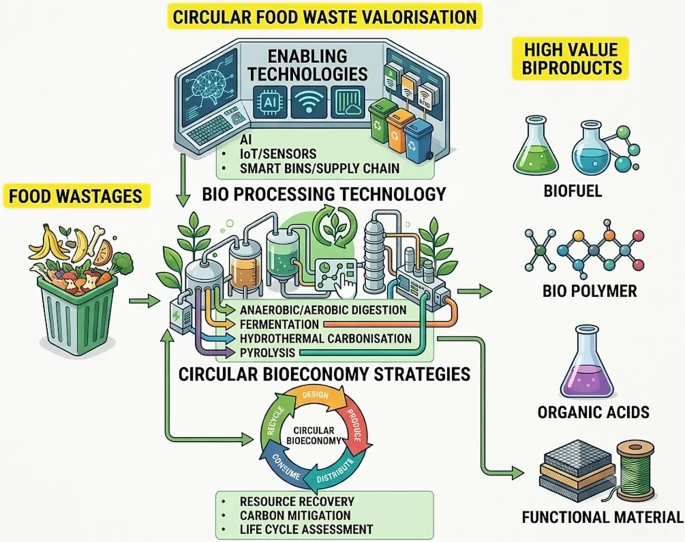
The work builds on research into bio-based polyurethane coatings for slow-release fertilizers. It also offers a use for rice straw waste and a petroleum-free route to high-performance farm inputs. The authors describe the approach as an example of circular economy thinking applied to agricultural technology.