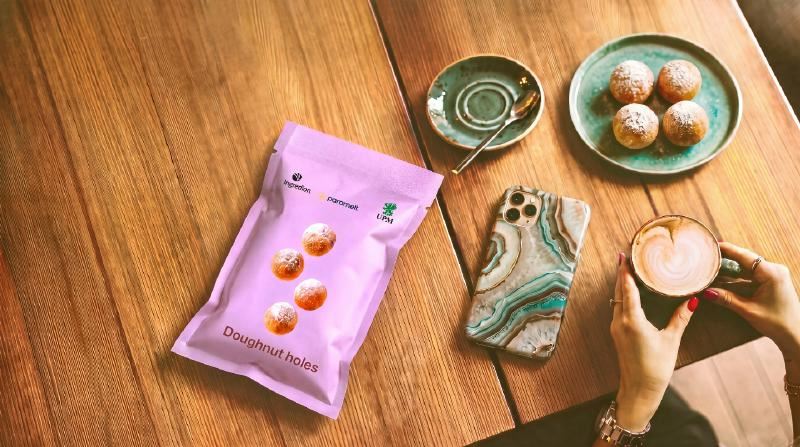
UPM Specialty Materials, Ingredion and Paramelt have developed a paper packaging prototype built around a bio-based starch barrier. The structure passed Part 1 of Western Michigan University’s recyclability test in the US.
The partners set out to explore how bio-based barrier technology can support recyclable paper food packaging. The target is grease resistance. The work responds to demand for recyclable solutions.
The prototype combines three elements. UPM supplies its Solide Lucent 78 gsm and Asendo 65 gsm papers. Ingredion contributes its plant-based starch barrier coating. Paramelt adds bio-based heat-seal and barrier coatings. Together, they form a fiber-based structure with renewable, bio-based barrier layers.
UPM says starch-based technologies open new opportunities for bio-based paper packaging, particularly for grease barriers. Sarah Dembroski of UPM Specialty Materials said broader paper options need innovation across the value chain. Anand Sundararaman of Ingredion said the combination shows a paper-based solution that supports more sustainable food packaging. Paramelt’s Neill Dutton said the future lies in pairing renewable, bio-based materials with high performance.

Food packaging paper has demanding requirements. Ria Tinga of Avebe previously told Packaging Insights that oil and grease resistance, runnability, food-contact compliance and cost-in-use remain essential. Bio-based barriers also respond to demand for PFAS-free options.
Other bio-based barrier work is under way. Finland-based Innomost has developed a barrier from birch bark for food, dried goods and non-food packaging. Amcor has partnered with UK start-up Kelpi to assess its seaweed-derived biomaterial.