Biobased capabilities are ever-evolving. This is none more apparent than in the world of food packaging.
The last six years has seen major R&D advances in biobased packaging that fights bacterial growth.
Labs and spinoffs around the world have produced a flurry of renewable materials that are both biodegradable and anti-bacterial.
With their innovations, researchers are overcoming one of the biggest drawbacks of bio-packaging in the past – their lack of anti-microbial properties.

The R&D trend is a response to increasing demand from the food industry for sustainable materials that also keeps food safe.
Here are the researchers and startups innovating in anti-microbial bio-packaging.
A race against biology
From the moment their products leave the factory, food producers are in a race against time. They need to get them into shops and onto consumer plates before spoilage makes them unsafe for consumption.
Food is vulnerable to three kinds of spoilage: physical (moisture loss, temperature fluctuation), chemical (reactions that degrade food quality), and microbial breakdown.
Microbial spoilage is one of the most dangerous and common. The World Health Organization estimates that foodborne illness from this causes about 420,000 deaths per year worldwide.
The bacteria, yeasts, and mold species behind this include Salmonella Typhimurium, Listeria monocytogenes, Escherichia coli, Staphylococcus aureus (S. aureus) and Pseudomonas aeruginosa. These microorganisms thrive in food environments, breaking down the organic compounds and giving rise to off-flavors, odors, and sometimes toxic by-products.
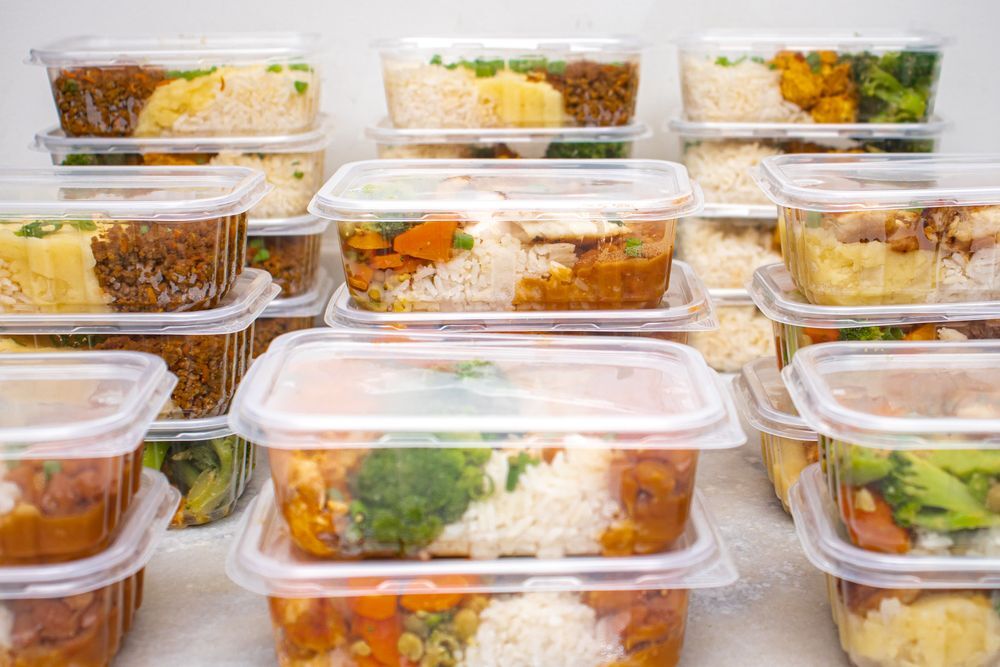
The pressure on all food producers to cheat microbiology has made the sector one of the largest contributors to the plastic pollution crisis. To make sure their products are safe and last longer, food companies rank among the biggest global consumers of single use petroleum plastics – only a fraction of which ever gets recycled.
Biobased innovation
All food is vulnerable to the bacterial onslaught. Proper packaging is one of the most important ways of slowing it down.
For this reason, oil plastics have long been the gold standard of anti-microbial food protection. While many biodegradable alternatives are better for the environment, many lack the bacteria-fighting properties needed to be safe food packaging materials. One example is PLA – a popular biobased packaging that lacks antimicrobial specs.
Materials that both protect food and biodegrades rapidly is the holy grail for the bio-packaging industry right now.
Luckily, the R&D around this is improving all the time. In recent years, there has been a glut of new biobased packaging materials coming out of major labs. These novel materials protect food from bacteria in innovative ways that put oil plastics in the shade for functionality.
Bio-polymer “cotton candy”
Some of the most prestigious material research institutes in the world have been chipping away at the problem of making biobased packaging materials that are anti-microbial.
One of the most exciting has been developed at the Harvard John A. Paulson School Of Engineering And Applied Sciences (SEAS). Its name is pullulan.
Edible, tasteless and naturally occurring, the polysaccharide pullulan is already commonly used in breath fresheners and mints. Being already compliant with food safety regulations is a bonus that plays in favour of its commercial prospects.
The material is also widely used in medicine, in the field of wound dressings.
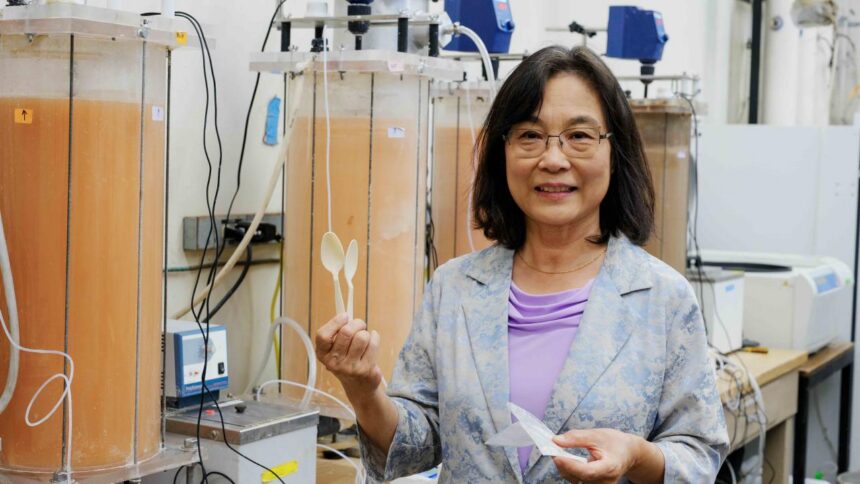
“As it turned out, wound dressings have the same purpose, in some ways, as food packaging — sustaining tissues, protecting them against bacteria and fungi, and controlling moisture,” said Huibin Chang, a postdoctoral fellow at SEAS.
It turns out that this material is easy to spike with natural antimicrobials, including thyme oil, nisin and citric acid. This potion of natural ingredients makes the pullalan capable of fending off bacterial attack.
The most important part of the team’s innovation is not just the material itself, however. It is also the manufacturing system it devise to extrude the stuff onto the surface of foods.
The platform consists of a precision applicator which spurts out spools of pullalan bio-polymer in liquid form through a tiny opening. The liquid threads deposit on the food, solidifying into a protective yet invisible layer of fibres.
Applying pullulan to food in this way looks a lot like a working candy floss machine, which spins sugar into thin threads.
An invisible barrier
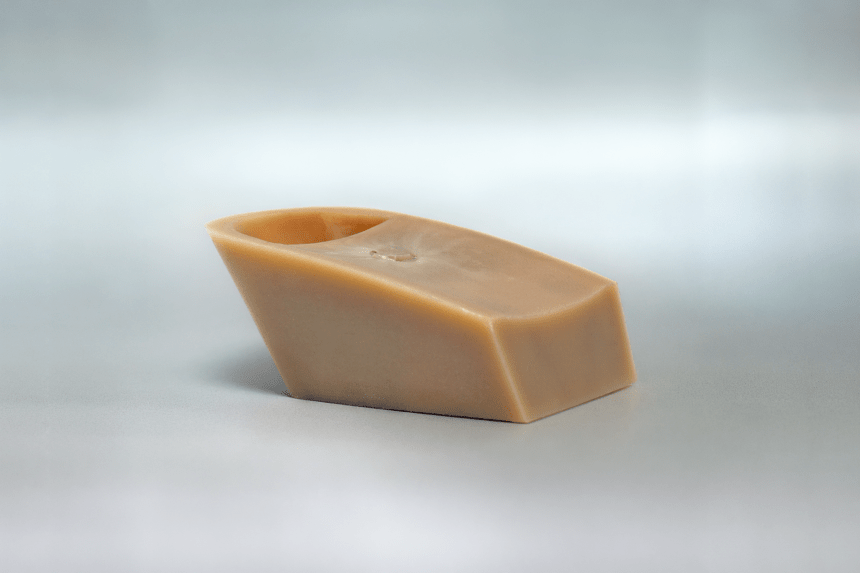
Thin, colourless, and unobtrusive, the barely-there character of pullulan reflects its lightweight impact on the environment, particularly compared to ordinary plastic wrapping.
What’s more, pullulan is an instance of biobased packaging going one better than fossil plastics.
Compared to the bulky plastic packages and wrapping we are used to in supermarkets, this lightweight layer could cut food transport costs by reducing the weight and volume of haulage.
The thin, edible and biodegradable layer on fresh food also means less waste to deal with. This is becoming an added advantage for industry in the EU, which is putting greater waste management responsibilities onto the companies that use packaging rather than their consumers.
Commercialising anti-microbial spray-on packaging
Pullalan gives a taste of what’s to come in future food packaging: invisible yet effective, it leverages the latest insights from material science to create a hyper-protective layer that.
Yet the material remains some way from commercialisation. Although a promising new bio-packaging, there are still issues with making the material moisture-resistant.
However, other anti-microbial biomaterials are already taking their first steps to the market.
Rice University spinoff Nivera is focusing on bringing a thin, edible coating to market made from naturally derived ingredients, such as proteins and fibers. The company says it triples produce shelf-life and slows microbial growth using natural compounds. There is a circular element too, as the material uses some agricultural by-products.
Similar to Harvard’s pullulan innovation, this coating is sprayed onto food. The manufacturing platform built on founder Neethu Pottackal’s doctoral background – one of her co-advisors at Rice was mechanical engineering professor Daniel Preston, whose lab had experience in spray coating tech.
Nivera claims its product is market ready because it has solved multiple food spoilage issues at once: not just microbial growth but also oxidation and moisture loss.
Founded in 2025, Nivera is still a young startup. It has indicated that it will initially focus on selling to higher-value fresh produce markets, such as for avocados and berries. This is a tried and tested commercialisation strategy for startups – entering high-value markets makes it more likely they will earn back R&D outlays quickly.
Making anti-microbials from waste
Another startup in anti-microbial bio-packaging is N&E Innovations. Despite being founded in 2020, N&E Innovations is among the most mature entities in the space. This shows just how young the field of anti-microbial packaging is.
The Singapore company made waves in the industry through 2026. Back in January, N&E won $1 million in the food category for the 2026 Zayed Sustainability Prize. In October, it raised AUD $2.4 million in Series A funding.
The startup is doing biobased food packaging slightly differently to most of the R&D out there. Usually, bio-packaging developers spike well-known biomaterials with natural extracts to turn them anti-microbial – thyme and citric acid in Harvard’s pullalan, for example.
Rather than inoculating materials with natural remedies, N&E are coming up with their own. The company extracts anti-microbial additives from agro-waste sources abundant in Asia like cashew nut shells and durian husks.
N&E’s product, then, is not a particular biomaterial. Rather, it’s a way of making anti-microbial additives that can be inserted into any kind of material or packaging, as well as cling wraps, hand sanitiser and more.
This flexibility in application is one of the things attracting investment to the firm – their product has potential markets across different segments.
This is not to say the company hasn’t brought out ready-to-use products. One of the first applications N&E used its additives in is The Orange Wrap. This is a cling-film that goes one better than ordinary plastic wrapping by actively killing microbial growth rather simply acting as a microbial barrier.
The promise laid out by N&E is that agro-waste could one day provide us with everything we need to build biobased anti-microbial packaging – from the materials that actually wraps around the product to the chemicals that turn it into an anti-microbial technology – all without relying on expensive botanicals.
Science plays to shifting regulations
Conventional bioplastics may have underperformed on bacterial protection but recent innovations are changing that.
Biobased alternatives have emerged that are raising standards around sustainable food safety. The development of biomaterials with anti-microbial properties means one less barrier for renewable materials entering the mainstream of food packaging.
All this is thanks to research at major material research institutes around the world. However, the recent wave of research into anti-microbial bio-packaging has been spurred on by regulatory shifts around the food industry.
Packaging regulations are only getting tighter in the EU and producers that sell on the market are trying to anticipate them. In Asia too – the world’s largest market for plastic packaging – governments are bringing in targets to stem the production and import of single use and non-biodegradable plastics.
Researchers know that long-term investment will favour lab innovations that not only protect consumer health but also the planet. As is usually the case in the bioeconomy, regulatory shifts and materials research are progressing in tandem.