


Features

Sensors go bio for clothes and medicine
Biosensors are instruments that detect the presence of specific molecules in just about any medium, even at trace concentrations. This capability relies on biological receptors housed inside them which chemically interact with target compounds on contact. These receptors are usually…

Bio-adhesives for boxes, body parts, and automotives
Glues may make up a relatively small proportion of individual products. Yet with around 14.7 million tonnes produced globally each year, the environmental impacts of adhesives add up. The solvents in liquid glues contaminate soil and groundwater while many wood…

Bioreactors today: challenges and innovations
Bioreactors are vessels where microorganisms, stem cells, or specialised cells are cultivated into functional materials. The oldest and simplest examples are containers used for baking bread or fermenting wine. Over the last twenty years, however, they have become sophisticated instruments…
Biomaterials and biotech converge to fight antibiotic resistance
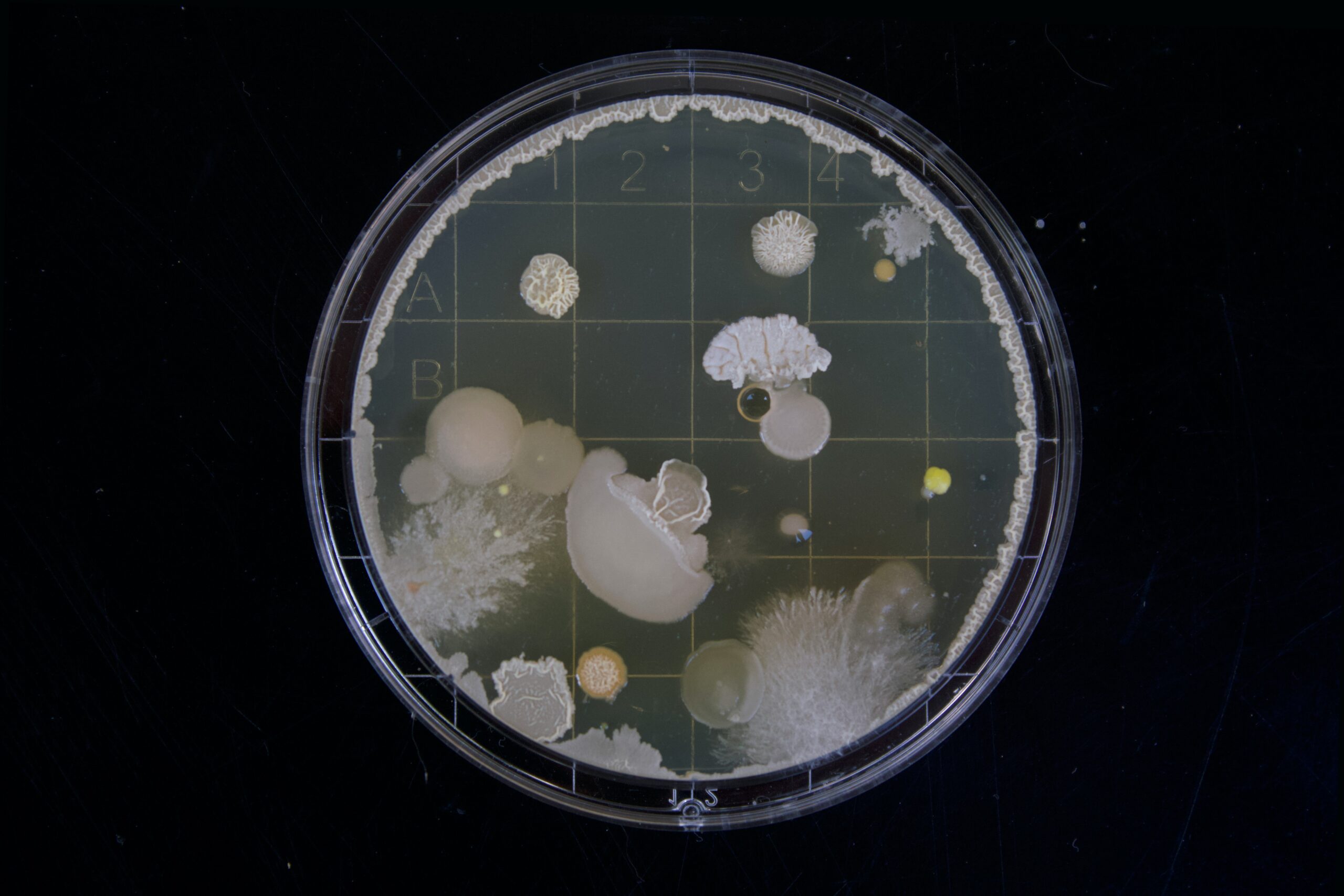
In 2020, Swedish startup Amferia received $650, 000 to commercialise a bacteria-killing hydrogel that could be used as wound patches, wound-healing granules, and medical device coatings. Its active compounds are not antibiotics but peptides, molecules that occur in plant, animal,…

Biomaterials that live, grow and die
Whether algae-based or oil-derived, all our industrial materials are composed of dead matter. Predictable and, above all stable, inert substances are ideal for many practical purposes. Their relatively simple molecular structures can be heated, twisted, and chemically treated to obtain…

Why the construction industry needs hemp and fungi
From 2020, the world can emit only 350 gigatonnes of carbon for a chance to stay within 1.5 degrees of warming. Maintaining the carbon budget will require a radical overhaul of how we make our buildings. Currently, manufacturing construction materials…