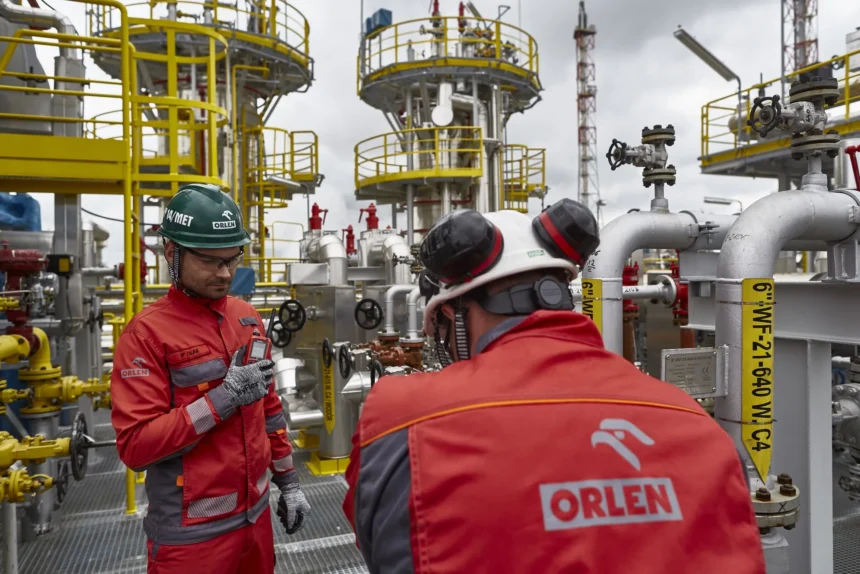
Polish energy giant Orlen has started operations at a new $220 million biorefinery in Plock, marking a significant expansion of the country’s renewable diesel capacity.
The facility, announced on 25 May, can process 300,000 metric tonnes of feedstock annually. It runs on a mix of rapeseed oil and used cooking oil, placing it squarely in the advanced biofuels category. With the plant now online, Orlen’s total biofuel production capacity rises to nearly 700,000 metric tonnes per year.
That figure is set to grow further. The company has set a target of 1.1 million metric tonnes annually by 2030.
The Plock site also benefits from parallel upgrades to two hydrodesulfurization units, which have been modified to coprocess renewable feedstocks, adding more than 100,000 metric tonnes of additional annual capacity.

Orlen CEO Ireneusz Fąfara said the plant would strengthen Poland’s fuel security, improve cost efficiency, and reduce the company’s exposure to global market volatility. The project is also expected to help build a domestic supply chain spanning both feedstocks and finished fuels.
On the regulatory side, the timing is deliberate. Poland faces a 10% biofuel blending target for 2026, and the new facility directly supports compliance with that requirement as well as the EU’s Renewable Energy Directive III framework.
Located around 70 miles northwest of Warsaw, Plock is already home to Orlen’s core refining operations. The biorefinery extends that infrastructure into renewables, reflecting the company’s broader strategy to integrate bio-based feedstocks into its existing refining base.