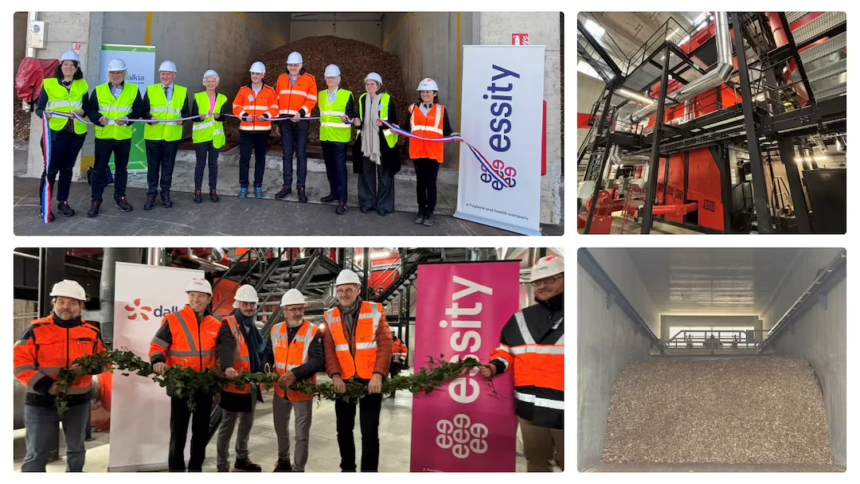
Essity, a global leader in hygiene and health, is strengthening its efforts to reduce industrial emissions. It has commissioned biomass energy plants at two production sites in France. These investments support Essity’s science-based climate targets. They also help the company reduce emissions from its own operations. The goal is to reach net zero by 2050.
The biomass plants are located at Kunheim (Alsace) and Le Theil-sur-Huisne (Normandy). These installations generate a significant portion of the energy needed for paper hygiene products. They use renewable, locally sourced biomass. The capacities are 7 and 5.8 megawatts, respectively. Together, they now supply between 70% and 75% of each site’s steam.
The projects are expected to cut natural gas use by up to 53%. They will also reduce the carbon footprint of paper machines by as much as 42%. The renewable energy supports the production of private-label paper hygiene products. These include toilet paper, paper towels, and tissues. Most of these products are for the French and European markets.
“Decarbonizing our operations is a key part of Essity’s sustainability plan,” said Sahil Tesfu, Chief Strategy and Sustainability Officer. “By expanding renewable, locally sourced energy, we can cut emissions now. It also makes our operations more resilient and competitive.”

These investments also help reduce the overall footprint of private-label hygiene products. This benefits retail customers who want greener product ranges. The biomass projects are part of long-term energy partnerships. They received support from national and European programs that promote industrial energy transition. The projects also strengthen local wood supply chains and improve regional energy independence.
Essity has operated in France for over 60 years. The new biomass plants show its commitment to modernizing sites and lowering environmental impact. The Kunheim and Le Theil-sur-Huisne projects are key examples of its global sustainability efforts.